
Fuel docks bring boats, petrol and electrical equipment within a few feet of each other, so one awkward approach can become a fire. This summary of the NTSB’s investigation covers what happened, the risk, and where Dtyle.AI fits.
1. Incident
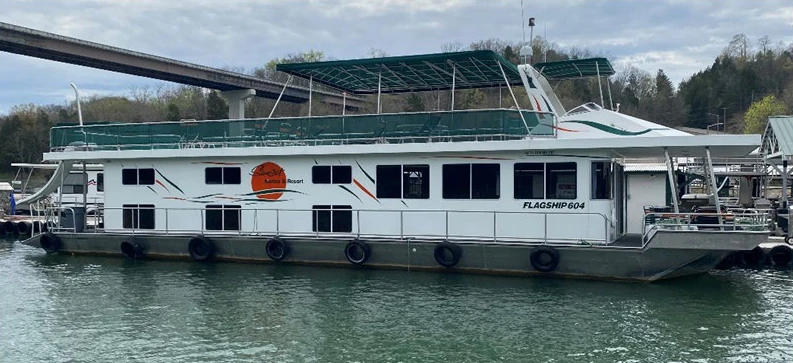
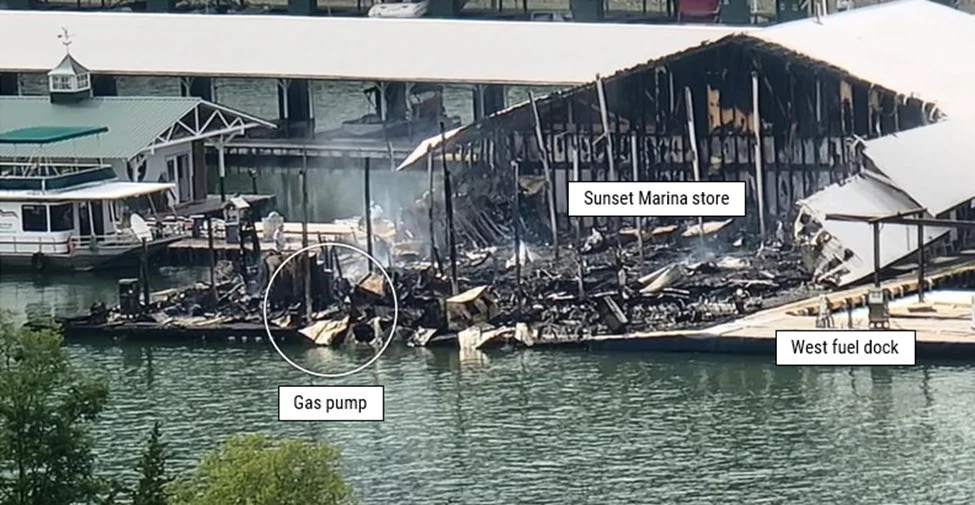
On 10 August 2023, at about 1705, the rental houseboat Flagship 604 was coming alongside the fuel dock at Sunset Marina on Dale Hollow Lake, Tennessee, when its bow struck and knocked over a petrol pump. Petrol sprayed from the broken fuel line and ignited within minutes, destroying the marina store.
- Vessel: a 74-foot (22.6 m) aluminium houseboat built in 2004, owned by Sunset Marina & Resort and rented to a group of nine for the week.
- Operation: the renter’s designated driver was bringing the houseboat in to refuel.
- Outcome: the marina manager suffered serious burns, the store was destroyed and three pontoon boats were damaged; the houseboat itself was not damaged.
2. Timeline
All times are local on 10 August 2023.
- About 1705: as the driver shifts into reverse, the engine cuts out and the wind pushes the houseboat along the dock, swinging its bow in.
- Next: the overhanging bow strikes a pump 5 feet back from the dock edge, and petrol sprays from the broken 2-inch supply line.
- Next: the manager presses the emergency stop, and an employee moves the houseboat to another dock.
- Moments later: while the manager tries to reach the manual shutoff valve under the pump, the fuel vapour ignites and the fire spreads to the store.
- 1715: firefighters arrive and stop the fire spreading further; they clear the scene at 2340.
3. Root Cause
The NTSB found that the houseboat’s “duckbill” bow struck the pump while docking in windy conditions, and an undetermined electrical source on the dock ignited vapour from the broken fuel line. The pump’s closeness to the dock edge contributed.
- The deck overhang extended up to 3.75 feet beyond the bow, high enough to pass over the dock and reach the pump.
- The tall houseboat caught the 10–15 mph wind, which made docking difficult even with a working engine.
- Petrol sprayed up to 50 feet, over electric ice freezers, a bait tank pump and exposed wiring at the pump.
- The pumps had manual shutoff valves only; current code requires automatic ones, but the existing installation did not have to be upgraded.
4. Risk
A fuel dock combines a flammable liquid, ignition sources and moving boats in a small space, so a minor contact can release fuel next to something that sparks.
- Petrol vapour can ignite almost immediately when it reaches an electrical arc.
- Setbacks designed for standard bows may not protect against boats with large overhangs.
- Rental boats are often driven by people with limited boat-handling experience.
- Wooden docks and buildings next to the pumps let a fire spread quickly.
5. Early Warning Signs
Several warning signs were present before the contact, but none was treated as a reason to change how the approach was made.
- The driver had already had the engine cut out when shifting into reverse earlier in the rental, though a mechanic later found no fault.
- The driver reported 10–100 hours of boating experience and no boating education.
- A 10–15 mph wind was blowing the houseboat towards the fuel dock.
- Electrical equipment sat within the area that a broken fuel line could spray.
6. How Dtyle.AI Helps
Dtyle.AI analyses a marina’s existing camera feeds on site. Where cameras cover the fuel dock, it can give staff earlier sight of an approaching boat and of a fire, alongside their own checks.
- Berth Monitoring tracks vessel approach and movement within configured berth areas, such as the fuel dock, so staff know when a boat is coming in.
- Fire & Smoke Detection can flag visible flame or smoke on covered docks and alert staff with a snapshot, the camera, the location and the time.
- Personnel Presence Monitoring estimates how many people are visible in a defined area, such as the dock around the pumps.
- Live views on the operations dashboard let managers see the whole fuel dock from one place.
7. Prevention
Dtyle.AI cannot detect petrol vapour, measure wind, diagnose an engine or stop fuel flowing, and it does not replace pump setbacks, automatic shutoff valves or docking assistance. Its contribution is giving staff a better chance to be ready before a boat reaches the pumps.
- An approach alert for a large rental boat gives staff time to meet it and help with the lines, especially in strong wind.
- Reviewing recorded approaches can show where boats regularly come close to the pumps, supporting decisions on layout and setbacks.
- Real footage makes renter briefings on docking in wind more concrete.
8. Response Support
Here the fire started within minutes of the contact and injured the person closest to the pump. Clear information about where people are and how the fire is spreading matters most in those minutes.
- A fire alert names the camera and location, so staff across a large site can respond straight away.
- Live views help keep people back from a fuel spill and show firefighters where the fire is spreading.
- Presence counts help check that the dock around the pumps has been cleared.
- Recorded clips give investigators and insurers a clear account of the contact and the fire.
9. Lessons Learned
The report makes no formal recommendations, but the marina has already acted and the findings apply to any fuel dock.
- The marina moved its store-front pumps to the centre of a new 20-foot-wide dock, 9 feet 4 inches from the edge.
- Automatic emergency shutoff (shear) valves were fitted below each pump, so fuel stops if a pump is knocked over.
- Pump setbacks should allow for the bow overhangs of the boats that actually use the dock.
- Electrical equipment near fuel docks should be kept well away from where fuel could spray.
10. Key Benefit
Marina staff get earlier, shared awareness of boats approaching the fuel dock and of any fire, across the areas cameras cover.
- Alerts when vessels approach configured berth areas.
- Visual confirmation of flame or smoke with a location.
- A clearer picture of who is near the pumps during an emergency.
- A record of approaches and incidents for layout reviews and staff training.