
Once a drill is over, the area where it took place can still be dangerous. This summary of the Bahamas Maritime Authority’s (BMA) investigation covers what happened, the risk, and where Dtyle.AI fits.
1. Incident
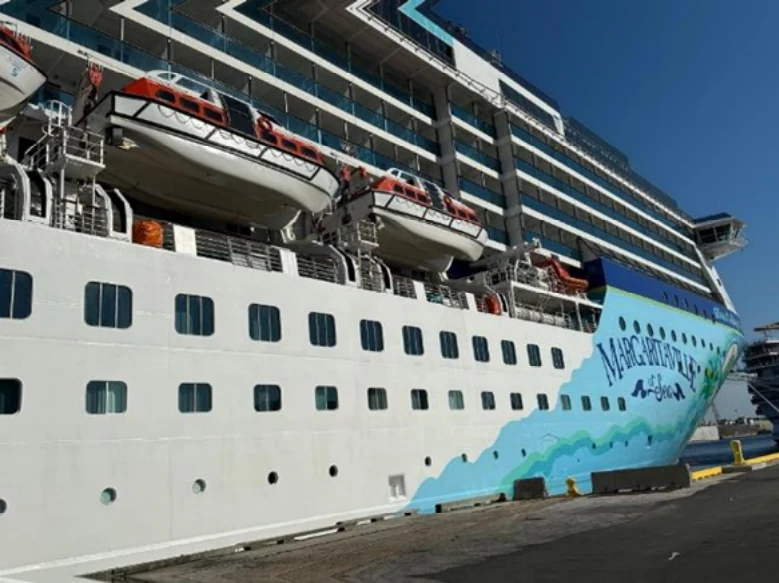
On 10 October 2024, an able seafarer on the passenger vessel Margaritaville at Sea Islander fell onto a lifeboat lashing platform while the ship was alongside in Cozumel, Mexico. The fall happened shortly after a lifeboat launching and recovery drill, and the crew member died later that day in hospital.
- Vessel: a Bahamas-flagged passenger ship built in 2000, 262.7 metres long, managed by Anglo-Eastern Cruise Management.
- On board: 813 crew and 878 passengers, during an exchange of passengers and crew.
- Outcome: one fatality, from internal injuries caused by the fall.
2. Timeline
All times are local on 10 October 2024.
- 09:20: a pre-drill briefing takes place, followed by an abandon ship drill that launches three port lifeboats and the rescue boat.
- 10:45: the able seafarer, who arrived after the drill had started, climbs the ladder to the lashing platform between lifeboats 2 and 4.
- About 10:50: the bosun walks through the area, notices nobody on the platforms and dismisses the crew.
- 11:03: two assistant bosuns nearby hear a cry and a fall, find the crew member injured on the platform and radio the bridge.
- 11:08–12:13: the medical team arrives, Code Alpha is called twice, and the casualty is taken ashore by ambulance; death is confirmed at 12:39.
3. Root Cause
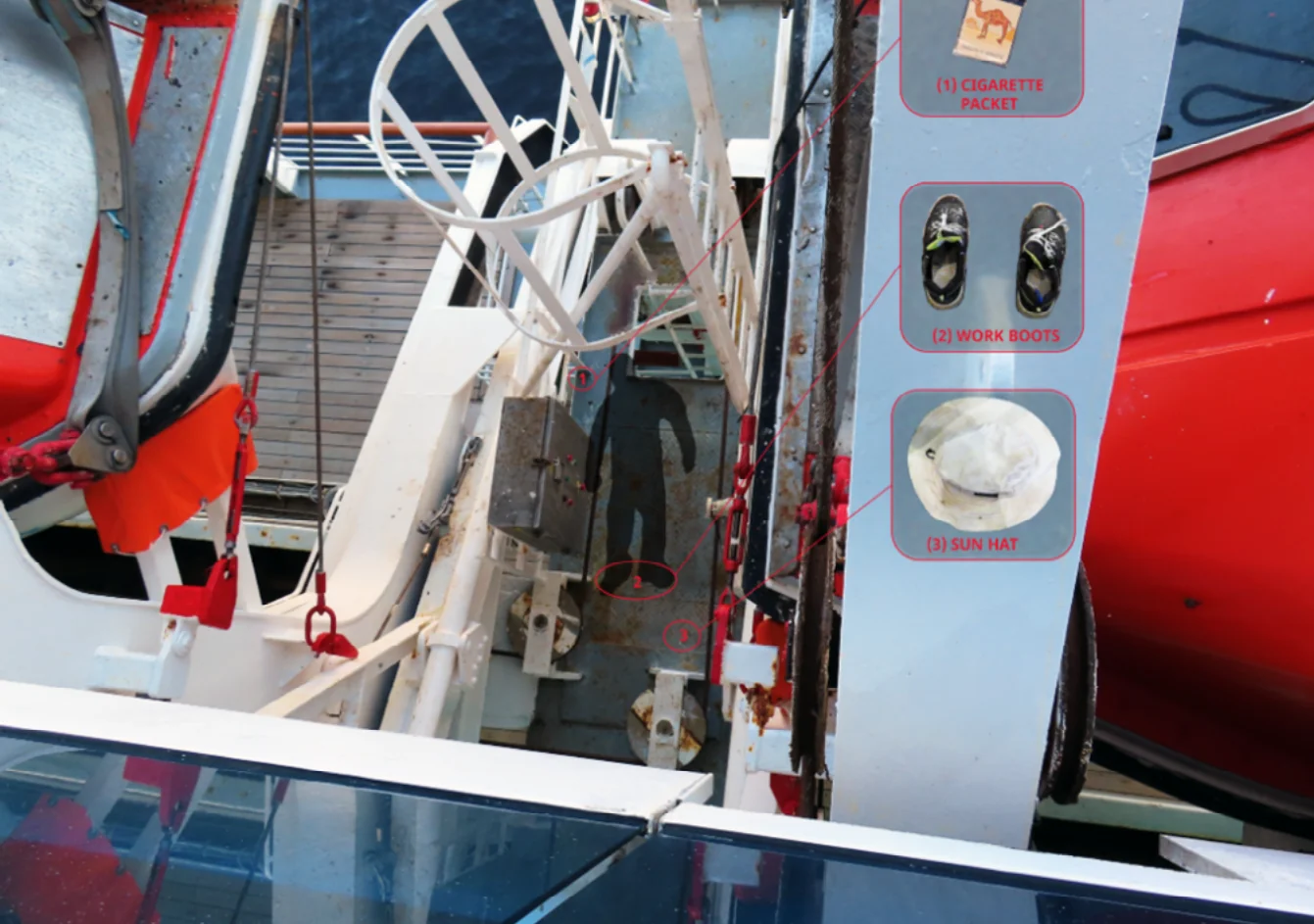
The BMA found that the crew member stayed on the lashing platform after the drill for an unknown, non-operational reason, without equipment to protect against a fall. The exact point of the fall could not be determined.
- Hard hats and harnesses were kept at the lifeboat stations but were not routinely used.
- In the 31°C heat, most crew wore more comfortable headgear; the crew member wore a sun hat.
- Signs near the stations called for hard hats, but there were no PPE symbols on the lashing platform itself.
- The written procedures and placards covered launching the lifeboats but not recovering them.
4. Risk
Falls from height remain one of the most persistent causes of death and injury at sea, and lifeboat areas combine height, confined platforms and complex equipment.
- An IMO submission found 44–52 fall accidents a year on ships over the last five years, usually involving one person.
- Seafarers working aloft or over the side were involved in 55% of the fall accidents where the task was recorded.
- A person working alone on a raised platform may not be seen if something goes wrong.
- Heat and humidity tempt crews to swap protective equipment for comfort.
5. Early Warning Signs
The signs were visible during the drill, but the practice had become normal.
- CCTV showed that most of the crew were not wearing hard hats, and the bosun was the only person seen with one.
- Harnesses were not being used to access the platforms at all.
- The buddy system had already broken down: another seafarer lashed lifeboat 4 alone because the crew member had not yet arrived.
- The crew member was still on the platform when the area was declared clear, and nobody noticed.
6. How Dtyle.AI Helps
Dtyle.AI analyses a vessel’s existing camera feeds on site, so its role depends on cameras covering the lifeboat deck and platforms. Here the bridge wing camera lost sight of the platform once lifeboat 2 was stowed, which shows how much camera placement matters.
- PPE Detection can check whether people in a configured zone, such as a lifeboat station, appear to be wearing hard hats, and give supervisors visual evidence of each exception.
- Personnel Presence Monitoring estimates how many people are visible in a defined area, which helps confirm that a platform is empty when a drill ends.
- Restricted Area Monitoring can alert the bridge when someone enters a configured zone, such as a lashing platform outside drill times.
- Slip & Fall Detection can alert the crew when someone in a covered area appears to have fallen and stays down.
7. Prevention
Dtyle.AI cannot make people wear protective equipment, and it cannot see a platform that no camera covers. Clear rules, signage, supervision and the buddy system remain the real defences. Its contribution is making gaps in these visible while there is still time to act.
- Hard hat alerts during drills give the bosun a better chance to correct the gear before work at height starts.
- A presence check before dismissal gives the bosun a better chance to see that someone is still aloft.
- An entry alert for a platform after a drill gives the bridge a reason to ask why someone is up there.
- Trends from recorded drills show supervisors and managers how often PPE is actually worn in hot weather.
8. Response Support
The crew responded within minutes, but responders were told “Deck 3 port side” and did not know they would be working on a confined platform. They had to send for a different stretcher.
- A fall alert gives the bridge a snapshot, so responders can see the exact location and how confined it is before they arrive.
- Live views on the dashboard help the medical team choose the right stretcher and equipment.
- Presence counts help show who is already at the scene and who is still needed.
- Recorded events give investigators a clearer account than witness memory alone.
9. Lessons Learned
The BMA made recommendations to the ship’s manager and to the flag administration itself.
- Anglo-Eastern should make sure crew safeguards work across all the conditions they work in, including hot weather.
- Supervisors should have strong support to enforce the right protective equipment.
- The BMA should consider a concentrated inspection campaign on falls from height on Bahamian ships, as it recommended after an earlier case.
- PPE signs should be backed by clear policies, so it is never left to the crew to decide where protection applies.
- A drill recreation showed the crew could do the work fully equipped.
10. Key Benefit
Supervisors get a clearer picture of who is wearing protective equipment and who is still in a work area, before a drill is declared complete.
- Visual evidence of hard hat use in configured zones.
- Confirmation that platforms and stations are clear before dismissal.
- Faster awareness of a fall in a covered area, with its exact location.
- Real examples for drills, toolbox talks and audits.