

A shortcut used by everyone on board can stop looking like a shortcut at all. This summary of the UK Marine Accident Investigation Branch’s (MAIB) report covers what happened, the risk, and where Dtyle.AI fits.
1. Incident
On 16 August 2022, the second officer of Kommandor Orca was operating a rail-mounted deck crane from its local controls at Portland, England. As the crane moved aft, the officer’s left leg was dragged into its unguarded rack and pinion drive, causing a serious leg injury.
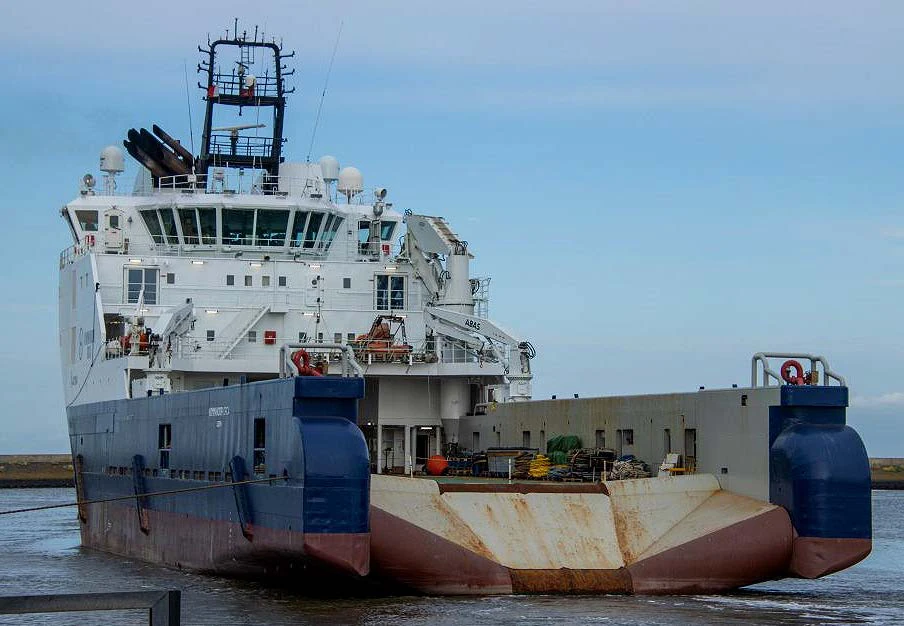
- Vessel: a UK-registered survey and research vessel built in 2006, 86.2 metres long, owned and managed by Hays Ships Ltd, with 14 crew.
- Work: moving deck gear to clear space for a container while alongside, with no undue urgency.
- Outcome: one serious leg injury, with no damage to the vessel or the environment reported.
2. Timeline
All times are local (UTC+1) on 16 August 2022.
- 0800: the chief officer holds a toolbox talk and completes the lifting plan and permit to work.
- Next: the second officer walks along the crane rail, then uses the local controls to reposition two loads.
- 0841: during the third lift, the officer pulls the travel lever and steps onto the rack; the overalls are caught, and gripping the lever for balance speeds the crane up.
- Next: the officer lets go, which stops the crane, and a fitter moves it forward to free the leg while the chief officer organises the first aid team.
- 0845: a company representative calls the emergency services, and by 0913 an air ambulance has landed on the quayside.
3. Root Cause
The MAIB found that the crane was being run in a way its manufacturer’s manual did not allow. The manual said the local controls were for emergency use only, so the crane had no personnel platform, guardrails or machinery guards at that position.
- The officer was following the training given on board, which covered only the local controls, and did not know about the other two ways to operate the crane.
- Neither the lifting plan nor the risk assessment identified working at height or the unguarded machinery.
- The vessel came out of cold lay-up with no handover from the previous crew, so its crane practice developed without enough reference to the manual.
- The safety management system had no vessel-specific crane procedure, and audits did not pick up the omission.
4. Risk
Rack and pinion drives can pull in clothing and limbs faster than a person can react, and the danger grows when the operator is standing at height beside them.
- UK guidance notes that most lifting equipment injuries happen when crew are struck by, crushed or caught in moving machinery.
- The local levers were proportional, so an instinctive grab for balance made the crane travel faster.
- A position 4 metres above the deck with only low bulwarks also brought a risk of falling.
- Tidy decks, correct overalls and paperwork in order can hide a method that is unsafe in itself.
5. Early Warning Signs
The warning signs were there to see, but they had become part of normal work. The crew said they felt free to challenge practices on board, yet nobody challenged this one.
- The local levers had been labelled by hand with duct tape and marker pen, and nobody questioned why.
- The officer had to stand with one foot on the bulwark and the other on the drive motor casing to see the fitter and the load below.
- A wireless remote fault on the port crane and limited visibility from the bridge station pushed the crew towards the local controls.
- Every crew member operated the crane the same way, which the MAIB saw as a sign of a weak approach to safety.
6. How Dtyle.AI Helps
Dtyle.AI uses a vessel’s existing cameras and analyses the video on site, so its role here depends on a camera covering the crane rail and pedestal. It watches for people in places the operator has defined as risky; it cannot judge the machinery itself or see which lever is in use.
- Restricted Area Monitoring can alert the bridge when someone enters a configured zone, such as the crane rail, with a snapshot, the camera and the time.
- Unsafe Act Detection can flag behaviours the operator has defined as risky, such as standing in a line-of-fire zone near moving equipment, so they can be reviewed and coached.
- Slip & Fall Detection can alert the crew when someone in a covered area appears to have fallen and stays down.
- Personnel Presence Monitoring estimates how many people are visible in a defined area, which supports oversight of lone working at height.
7. Prevention
Dtyle.AI cannot fit a guard, stop a crane or spot a hazard nobody has identified: someone has to decide that the crane rail is a controlled zone. Following the manual, guarding the machinery and sound risk assessments remain the real defences. Its contribution is making a routine practice harder to overlook.
- An alert each time someone goes onto the crane rail gives the bridge a better chance to ask why the remote controls are not being used.
- Reviewing events shows how often people enter a zone like this, turning a habit into something managers and auditors can see and question.
- Real footage gives toolbox talks and training a clear example of a position to avoid.
8. Response Support
Help arrived quickly here because a fitter was close by. Where someone is working alone, knowing about the fall and its location may matter more.
- A fall alert names the camera and location, so a responder can be sent straight to the right place.
- Live views on the dashboard let officers on the bridge see a covered area while the first aid team is on its way.
- A view of the area can help officers plan how to bring a casualty down from a raised position.
- Event records give the company and investigators a clearer account of what happened.
9. Lessons Learned
The MAIB made no recommendations because of the action the owner had already taken. Its findings still apply to any vessel joining a fleet, especially one without a handover. Action already taken by Hays Ships includes:
- The bridge station or wireless remote control units must now be used to operate the rail-mounted cranes.
- Crews have received instruction in lifting operations from an approved training organisation.
- The safety management system has been fully reviewed, including the sections on crane operations and cargo handling.
- Guardrails, rack and pinion guards and a crane emergency stop have been fitted, for safe access to the local controls during maintenance or a remote control failure.
10. Key Benefit
Risky routines in configured zones become visible, so they can be questioned before they are simply accepted as the way the job is done.
- Alerts when people enter zones the operator has marked as controlled.
- A record of how often those zones are entered, for reviews and audits.
- Faster awareness of a fall in a covered area.
- Real examples for crane safety training and toolbox talks.