

A ship can pass every planned check and still carry a fault that nobody is able to see. This summary of the NTSB’s investigation covers what happened, the risk, and where Dtyle.AI fits.
1. Incident
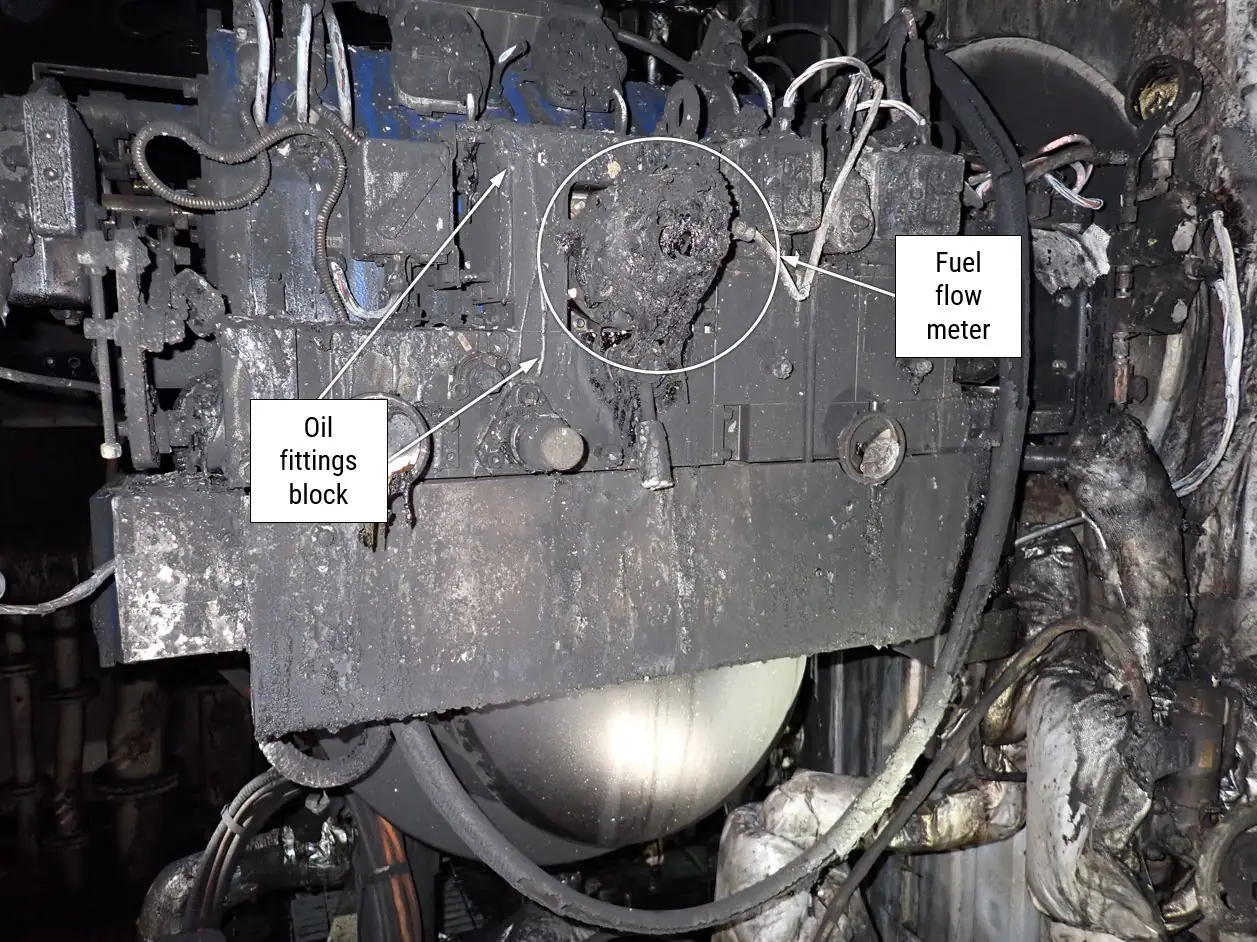
On 4 January 2025, at about 2323, a fire started near the boiler in the engine room of the bulk carrier Lem Verbena while it was docked at the Alabama State Docks in Mobile. The water mist system did not put it out, and the crew extinguished it by releasing the fixed CO2 system.
- Vessel: a 655-foot (200 m), Marshall Islands-flagged bulk carrier built in 2020, operated by Lemissoler Shipmanagement.
- Operations: the vessel had just finished offloading pig iron, with 19 crew on board.
- Outcome: no injuries or pollution; damage was estimated at $5.5 million.
2. Timeline
All times are local, from the evening of 4 January 2025.
- About 2300: routine rounds of the engine room take place, and the upper engine room round notes no issues.
- 2317: the boiler’s burner unit cycles off normally, a minute after cargo operations finish.
- 2322: the fire alarm sounds and the water mist system deploys seconds later; the second engineer sees burning fuel dropping to the decks below.
- 2328–2334: the master sounds the general alarm, all crew are accounted for by 2330, and two entry attempts in breathing apparatus are driven back by heat and smoke.
- 2340: the master decides to release CO2; shoreside firefighters arrive about 2350 and confirm the fire is out at 0037.
3. Root Cause
The NTSB determined that an O-ring seal failed on the boiler burner unit’s oil fittings block because two fuel ports were misaligned. Pressurised diesel then atomised and ignited on a nearby hot surface.
- The misalignment left part of the O-ring pinched between two modules, so it could not seal properly.
- A software settings error kept the fuel pump running between burner cycles, exposing the seal to constant pressure.
- The operating company found that hot, pressurised fuel sped up the seal’s degradation until it failed.
- The exact ignition source could not be determined; the hot boiler and the running generator’s exhaust were both possibilities.
4. Risk
Pressurised fuel lines close to hot surfaces are among the most serious fire hazards in an engine room, because a small failure can spray a fine, easily ignited mist.
- Burning fuel can fall through metal gratings and spread a fire to several decks at once.
- Heat and smoke can make a space impossible to enter within minutes.
- Smoke and heat damaged the alarm pull stations, general alarm horns, cabling and fire doors on the upper deck of the engine room.
- A fuel pump that keeps running can continue to feed a leak until someone isolates it.
5. Early Warning Signs
There was almost no visible warning. Maintenance records were clean, and the fault sat inside a closed assembly.
- The gap between the misaligned ports could not be seen or detected once the modules were bolted together.
- Daily, weekly and monthly tasks, and the quarterly burner inspection about two months earlier, noted no issues.
- Safety rounds of the boiler space took place 5–6 times a day, but they focused on boiler pressure, water leaks and water level.
- A wooden supply shelf sat directly below the burner unit, under the metal grating, and was destroyed in the fire.
6. How Dtyle.AI Helps
Dtyle.AI analyses a vessel’s existing camera feeds on site, and Lem Verbena’s engine room CCTV did capture this fire. It adds a visual picture alongside the certified fire alarm and water mist system, both of which activated here.
- Fire & Smoke Detection can flag visible flame or smoke in covered engine room views and alert the crew with a snapshot, the camera, the location and the time.
- Live views on the operations dashboard can show how a fire is moving between decks without anyone going into the space.
- Housekeeping Monitoring can highlight obstructions in designated clear areas where a camera covers them, such as the space around a boiler.
- Personnel Presence Monitoring estimates how many people are visible in a defined area, which is useful before a space is sealed.
- Muster Monitoring supports headcounts at covered assembly points.
7. Prevention
Dtyle.AI could not have detected this fault: it cannot see inside a sealed fuel block, measure pressure, read software settings or detect fuel vapour. Correct assembly, verified settings and inspections remain the real defences. Its contribution is earlier sight of what can be seen.
- A camera trained on the boiler area gives a better chance of spotting smoke or a flame from the first moments of a leak.
- Regular snapshots of designated clear areas can help keep stored items away from fuel equipment and hot surfaces.
- Remote views of the boiler area let the watch take an extra look between rounds.
8. Response Support
The crew’s quick response made the CO2 release effective: they stopped the fuel pumps, shut the ventilation and mustered before the decision was made. Visual information can support each of those steps.
- While engine room cameras keep working, live views help the master judge the fire’s size when entry is too dangerous.
- Personnel presence counts help show that nobody is visible in covered areas before CO2 is released.
- Muster views help confirm headcounts, as long as the assembly point used is covered; here the crew moved to the side nearest the pier.
- Recorded clips help firefighters and investigators understand where the fire began and how it spread.
9. Lessons Learned
The report makes no formal recommendations, but its findings hold clear lessons for shipowners and engineers.
- Passing routine checks does not rule out a hidden assembly fault, so fuel system joints deserve close attention whenever they are opened.
- Burner software settings should be verified against the manufacturer’s design; after the fire, a technician corrected the configuration so the pump stopped between cycles.
- Combustible stores should be kept well away from fuel equipment.
- Securing fuel and ventilation early, then keeping the space sealed while CO2 soaks, gives a fixed system its best chance.
- Clear communication with shore firefighters helped them decide not to open the space too early.
10. Key Benefit
A clearer, shared view of a machinery space fire in the areas cameras cover, so crews can make difficult decisions without putting people inside.
- Visual confirmation of flame or smoke, with a location, alongside the fixed alarm.
- A view of how a fire is spreading while the space cannot be entered.
- Support for headcounts before a CO2 release.
- A visual record for investigations, drills and crew training.