

Moving people between ships and small boats at anchor is routine, yet it keeps claiming lives. This summary of the Bahamas Maritime Authority’s (BMA) investigation covers what happened, the risk, and where Dtyle.AI fits.
1. Incident
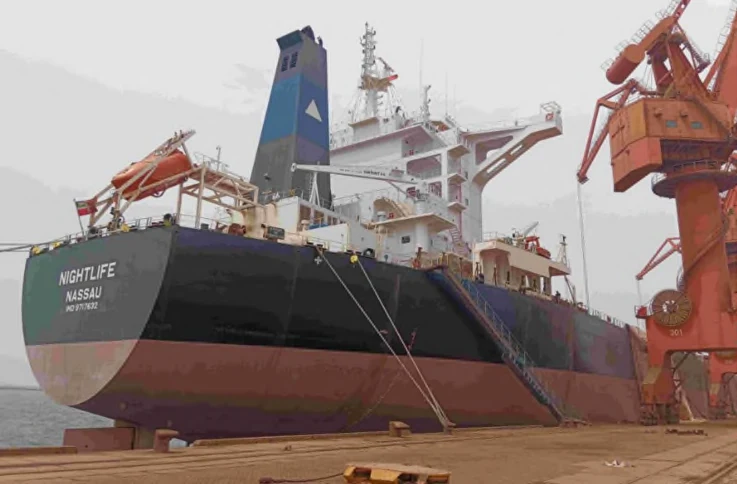
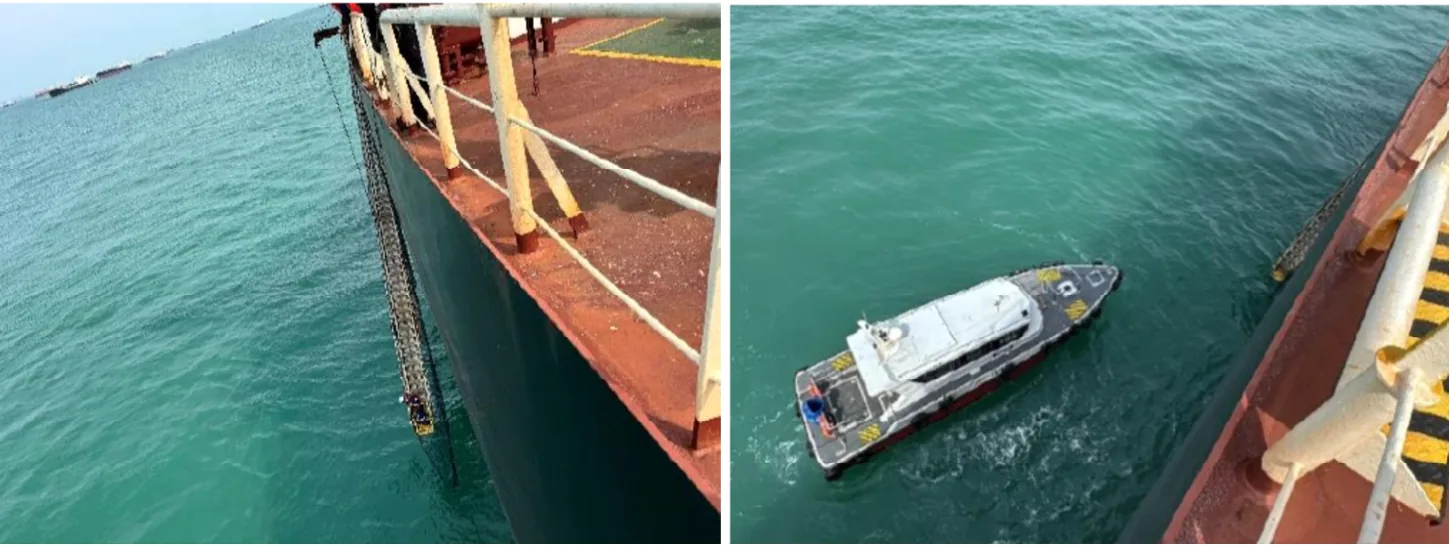
On the evening of 17 January 2026, a bunker surveyor fell while stepping from the bulk carrier Nightlife’s accommodation ladder onto the service boat SG Naav, off Singapore. The surveyor later slipped into the sea, lost a poorly secured lifejacket, and could not be lifted back aboard the boat.
- Vessels: Nightlife, a 292-metre Bahamas-flagged bulk carrier at anchor in ballast, and SG Naav, an 11-metre service boat with two crew.
- Operations: at the same moment, Nightlife’s crew were mooring a bunker barge and starting hull-cleaning dives.
- Outcome: the surveyor was recovered by a Police Coastguard boat but was pronounced dead in hospital; the post-mortem found drowning.
2. Timeline
All times are local on 17 January 2026.
- Afternoon: Nightlife anchors, a dive barge moors to starboard, and two bunker surveyors board and complete their survey by about 17:10.
- 18:45–19:00: SG Naav is called to collect the surveyor, but the arriving bunker barge takes the port side, so the boat moves to starboard.
- Next: with the starboard combination ladder blocked by the dive barge’s mooring lines, the bosun rigs the accommodation ladder instead.
- About 19:25–19:30: the surveyor steps across to the pitching boat and falls on deck; the bosun and duty seafarer are called away to the bunker barge.
- 19:38–20:00: the surveyor falls into the sea, man-overboard radio calls go unheard by Nightlife, and the Police Coastguard recovers the surveyor at about 20:00.
3. Root Cause
The BMA found that the transfer arrangements, the boat’s movement and the lack of supervision combined, and that the surveyor then could not be kept afloat or recovered.
- The high freeboard, a steep forward-leading accommodation ladder and a removed outboard stanchion made the step across complex.
- The lifejacket was not effectively secured and came off once it inflated.
- SG Naav had no man-overboard recovery equipment beyond lifebuoys, and its freeboard was too high to pull the surveyor aboard.
- No responsible officer supervised the transfer, so the ship’s crew and rescue equipment were never brought in.
- Three simultaneous operations had not been risk-assessed, individually or together.
4. Risk
Transfers between ships and boats are among the riskiest moments at anchor, and the people most exposed are often not crew at all.
- Small boats rise, fall and roll next to a ladder that stays still, so timing the step is difficult.
- Surveyors, technicians and crew changers are not covered by the pilot transfer rules in force today.
- In the BMA’s review of 10 similar cases, the service boat could not recover the person in the water in almost every one.
- Busy calls at maritime hubs pack many operations into a short stay, stretching the crew.
5. Early Warning Signs
Several signals pointed to a risky transfer, but each was absorbed by the pressure of the other operations.
- The usual combination ladder could not be used because the dive barge’s lines were in the way.
- The boat was rolling and pitching heavily in a Force 5 wind, and its deckhand signalled the surveyor to wait.
- Sunset had passed, and the boat was soon lost from view in the dark.
- The radio calls lacked a callsign or position and did not follow the distress format.
6. How Dtyle.AI Helps
Dtyle.AI analyses a ship’s existing camera feeds on site, so its role depends on cameras, and enough light, covering the ladder and the water around it. It works alongside the crew’s own watch and radio procedures.
- Gangway Monitoring gives visibility of people boarding and leaving at the access point, and highlights unsafe conditions there.
- Person Overboard Detection monitors configured waterside camera views and alerts the bridge when a person appears to fall or be in the water, with a snapshot.
- Personnel Presence Monitoring estimates how many people are visible at the ladder head, helping show whether anyone is supervising a transfer.
- Live views on the operations dashboard let the bridge follow a transfer while handling other operations.
7. Prevention
Dtyle.AI cannot steady a boat, check that a lifejacket is fastened, or decide when a transfer is too risky. Proper transfer arrangements, supervision and planning for simultaneous operations remain the real defences. Its contribution is keeping the transfer visible when attention is pulled elsewhere.
- A gangway alert when someone starts down the ladder gives the bridge a better chance to make sure an officer is there.
- A view of the ladder head with nobody present is a prompt to pause the transfer until it is supervised.
- Recorded transfers show how often ladders are rigged in less than ideal ways, supporting procedures and risk assessments.
8. Response Support
Here, Nightlife’s crew did not know anyone had fallen. Calls from the boat were not heard, so the ship’s rescue equipment was never used.
- A person-in-water alert on the bridge, with a snapshot, could tell the officer of the watch straight away that someone was in the water.
- Live views of the ship’s side help the crew direct lifebuoys and rescue boats to the right place.
- Dtyle.AI does not make distress calls, so a clear Mayday on the right channel is still essential.
- Recorded clips give investigators a clearer account than conflicting witness memories.
9. Lessons Learned
The BMA made recommendations to the boat operator, the Singapore port authority and itself, and several organisations have already acted.
- SG Naav’s operator should carry suitable equipment to recover a person from the water, and the port authority should check this at licensing and inspection.
- The BMA will work with industry on guidance for simultaneous operations.
- The BMA’s Information Notice 18 now says pilot transfer protections apply to anyone using those arrangements, not just pilots.
- The boat operator held a safety stand-down and tightened its rules on freeboard limits, ladders and stopping unsafe transfers.
- Nightlife’s manager has added controls covering a person’s mobility, PPE, baggage and small-craft movement before a transfer.
10. Key Benefit
Personnel transfers stay visible to the bridge even during busy calls, and a fall into the water is seen sooner where cameras cover the ship’s side.
- Visibility of people using the ladder and of who is supervising.
- Faster alerts when a person appears to be in the water.
- Live views to direct a rescue from the ship.
- A record of transfers for planning, audits and training.