

Bunker tankers moor alongside other ships many times a week, and that routine can hide real danger at the winch. This summary of the Gibraltar investigation covers what happened, the risk, and where Dtyle.AI fits.
1. Incident
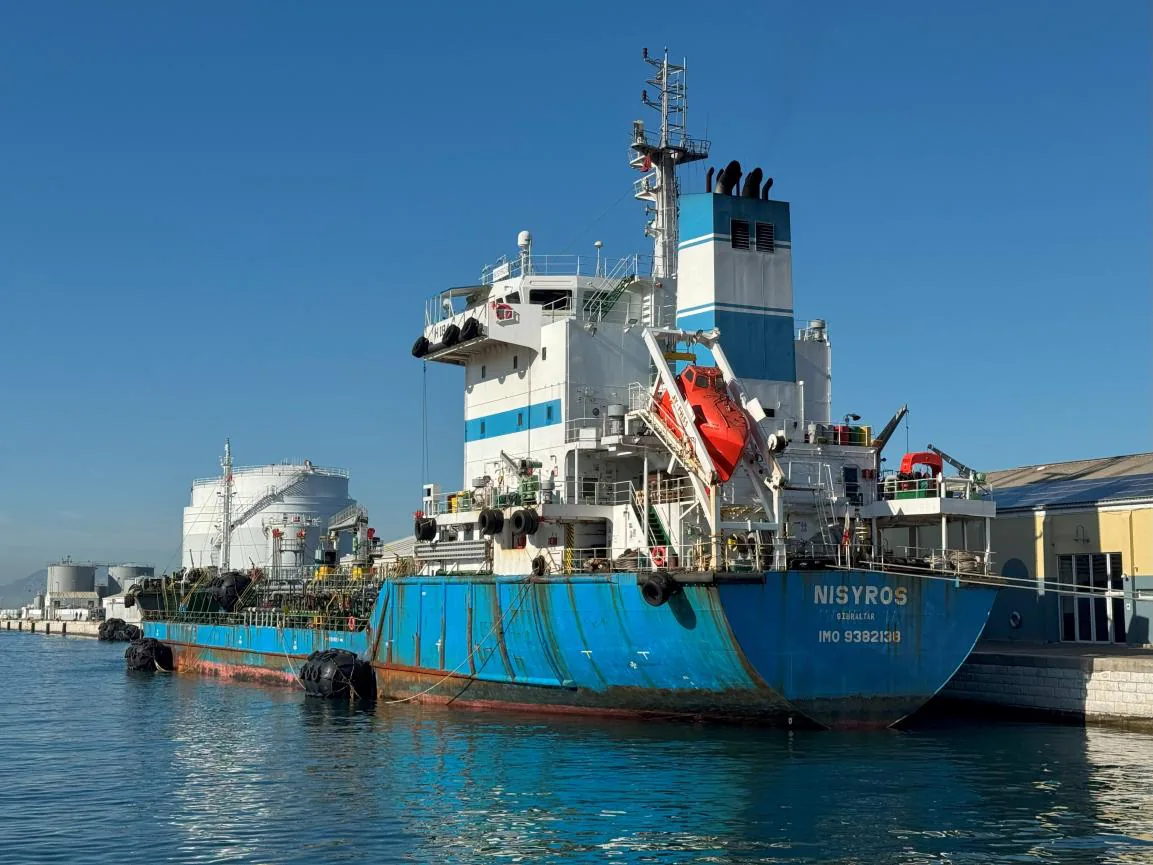
At about 1506 on 20 May 2025, the pumpman of the bunker tanker Nisyros was fatally injured while operating the port forward mooring winch, as the ship moored alongside the bulk carrier Kingfisher D in the Gibraltar western anchorage. He was alone on the forecastle and is believed to have been caught in slack rope as the winch heaved it in.
- Vessel: the Gibraltar-registered oil tanker Nisyros, built in 2010 and managed by MM Marine Inc, supplying fuel to ships in Gibraltar.
- Operation: mooring alongside Kingfisher D for a bunkering operation, in fine weather with very light winds.
- Outcome: the pumpman sadly died; there was no damage to either ship or to the environment.
- Investigation: carried out by Gibraltar’s Office of the Marine Accident Investigation Compliance Officer.
2. Timeline
The accident happened within minutes of Nisyros coming alongside.
- About 1430: Nisyros heads for Kingfisher D at anchor; at 1454 the mooring plan is signed off, with two crew at each mooring station.
- About 1500: Nisyros is alongside, with a headline and a stern line out, and the forward crew prepare the spring line.
- Shortly after: the able seaman goes down to the main deck to attach the heaving line, leaving the pumpman alone at the winch.
- About 1506: the chief officer of Kingfisher D sees the accident; alerted by shouting, the able seaman runs back, stops the winch and calls the bridge.
- 1507: the port is alerted and medical help requested; Nisyros casts off and berths at 1606 so emergency services can board, but the pumpman had died.
3. Root Cause
No one on board saw the accident, but the investigation concluded that the pumpman was most likely caught in slack rope while standing close to the drum, and drawn into the winch.
- The forward mooring party was two seafarers instead of the three the mooring plan required, with no officer in charge, to keep within hours of rest rules.
- The master didn’t report the reduced mooring party to the company.
- The winch lever is 1.9 metres from the drum, so the winch was probably kept running by clipping the lever with its safety catch, letting the operator leave the controls.
- With no one else at the forecastle, there was nobody to stop the winch.
- The company’s mooring risk assessment covered ropes and lines, but not the hazards of working with winches.
4. Risk
Mooring winches combine heavy loads, moving rope and turning drums, often in a small space.
- A rope being heaved in can catch a foot or a hand and pull a person towards the drum within seconds.
- A winch kept running without someone holding the lever can’t be stopped quickly.
- Working alone means no one is there to stop the winch or raise the alarm.
- Repetitive operations, like thousands of bunker deliveries a year, can make shortcuts feel normal.
- Ships at anchor may be far from medical help; in Gibraltar, paramedics can no longer be sent to vessels at anchor.
5. Early Warning Signs
The unsafe practices appear to have built up over time, without anything stopping them becoming routine.
- A 2014 flag state inspection found a windlass operating handle secured to its lever, the same kind of shortcut.
- Mooring parties had regularly been reduced to two, with no officer, and the change was never reported to the company.
- The pumpmen routinely formed part of the mooring parties and sometimes worked outside their allotted hours.
- The operator’s Gibraltar fleet carried out 3,350 bunkering operations in the year before, which the investigation said could normalise risk.
6. How Dtyle.AI Helps
Dtyle.AI can’t stop a winch, check how its lever is set or fit guarding, but where cameras cover the forecastle, it makes people working close to running winches, and mooring stations left with too few crew, visible to the bridge.
- Mooring Operation Monitoring detects people inside configured snap-back and line-of-fire zones while lines are under load, such as the area around a winch drum heaving in rope.
- Personnel Presence Monitoring estimates how many people are visible at each mooring station, showing when one person is working alone.
- Unsafe Act Detection highlights behaviours the operator defines as risky, such as standing close to a turning drum, so they can be reviewed and coached.
- Live views on the operations dashboard let the master and officer of the watch see the forecastle from the bridge throughout the mooring.
7. Prevention
Dtyle.AI doesn’t replace an officer in charge at each mooring station, enough crew, drum guarding or winch controls that can’t be clipped in the running position; those are what keep people out of a winch. Its role is to make it harder for a short-handed or unsafe mooring to go unnoticed.
- An alert when someone enters the drum zone while rope is being heaved in gives the bridge a better chance to call a stop.
- Presence counts show the bridge when a mooring station is down to one person.
- Event records over many moorings show whether people routinely work near running drums, so audits and unannounced checks can target the habit.
- Recorded clips give real examples for the toolbox talk before each mooring.
8. Response Support
Here, the alarm came from shouts by the crew of the other ship, and the able seaman ran back to stop the winch.
- An alert with a snapshot, the camera and the time tells the bridge at once that something is wrong at the forward station.
- Slip & Fall Detection recognises when a person appears to have fallen and remains down, helping send help to the right place.
- Live views help the master brief the port and emergency services while the ship is moved to a berth.
- Recorded clips show what happened when, as here, no one on board saw the accident.
9. Lessons Learned
The ship’s manager has made wide changes, and the investigation made recommendations to the company, the port and Gibraltar’s emergency services.
- MM Marine issued a safety flash and alert, started unannounced mooring audits, and is adding crew, including an extra officer on some vessels, so every mooring station has a supervisor.
- Fleet deck crews were given mooring risk assessment training, and the master and chief officer will be retrained in safe mooring.
- The company was recommended to assess winch hazards, hold a toolbox talk before every mooring, and consider controls that stop the lever being clipped in the running position, plus guarding around the drum.
- The Gibraltar Port Authority was recommended to check mooring practices during unannounced visits to bunker vessels.
- Gibraltar’s ambulance and health services were recommended to restore emergency medical response for vessels at anchor.
10. Key Benefit
A clearer view of who is at each mooring station and how close they are to running winches, so short-handed or risky moorings are corrected before someone is hurt.
- Alerts when people enter line-of-fire zones around winch drums.
- Presence counts showing when a mooring station is short of crew.
- Live views of the forecastle for the bridge during every mooring.
- Recorded evidence for audits, toolbox talks and investigations.