

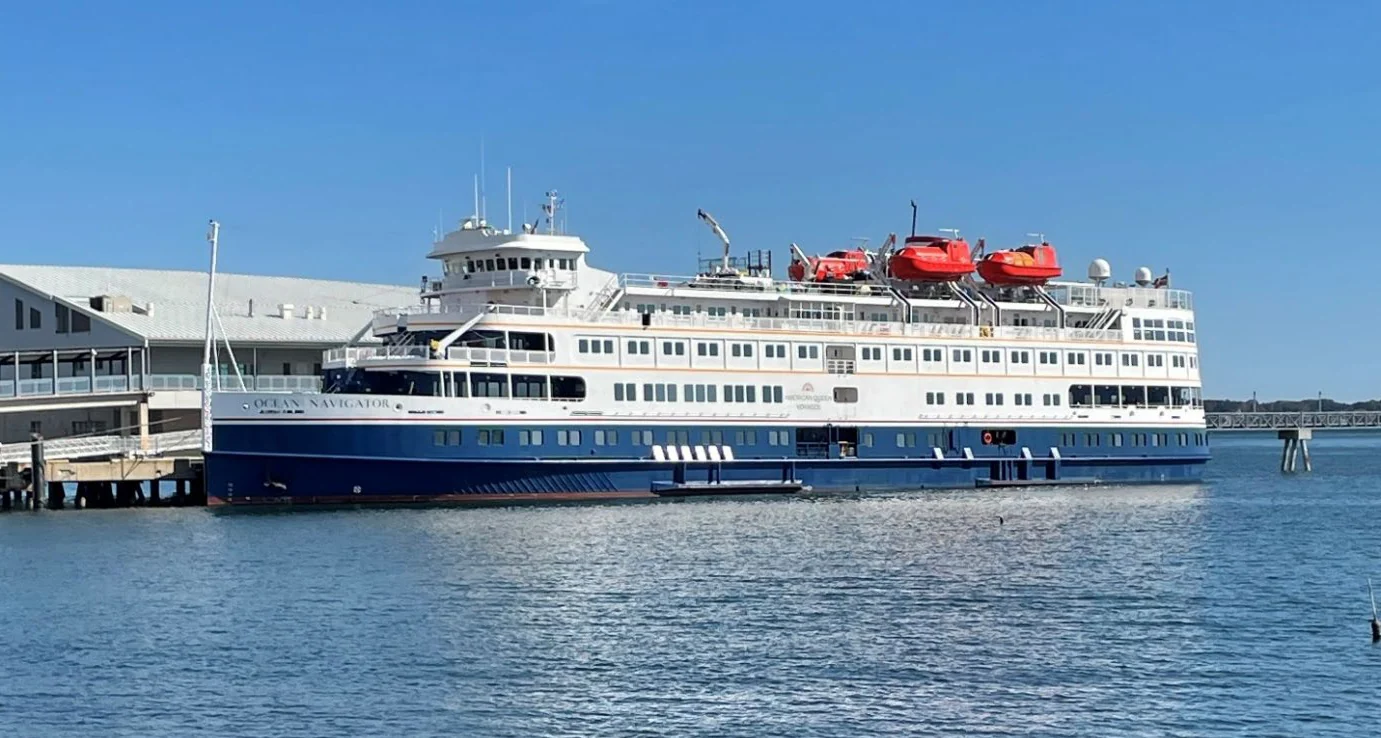
A generator that seems to run normally can be wearing itself out from the inside. This summary of the NTSB’s investigation covers what happened, the risk, and where Dtyle.AI fits.
1. Incident
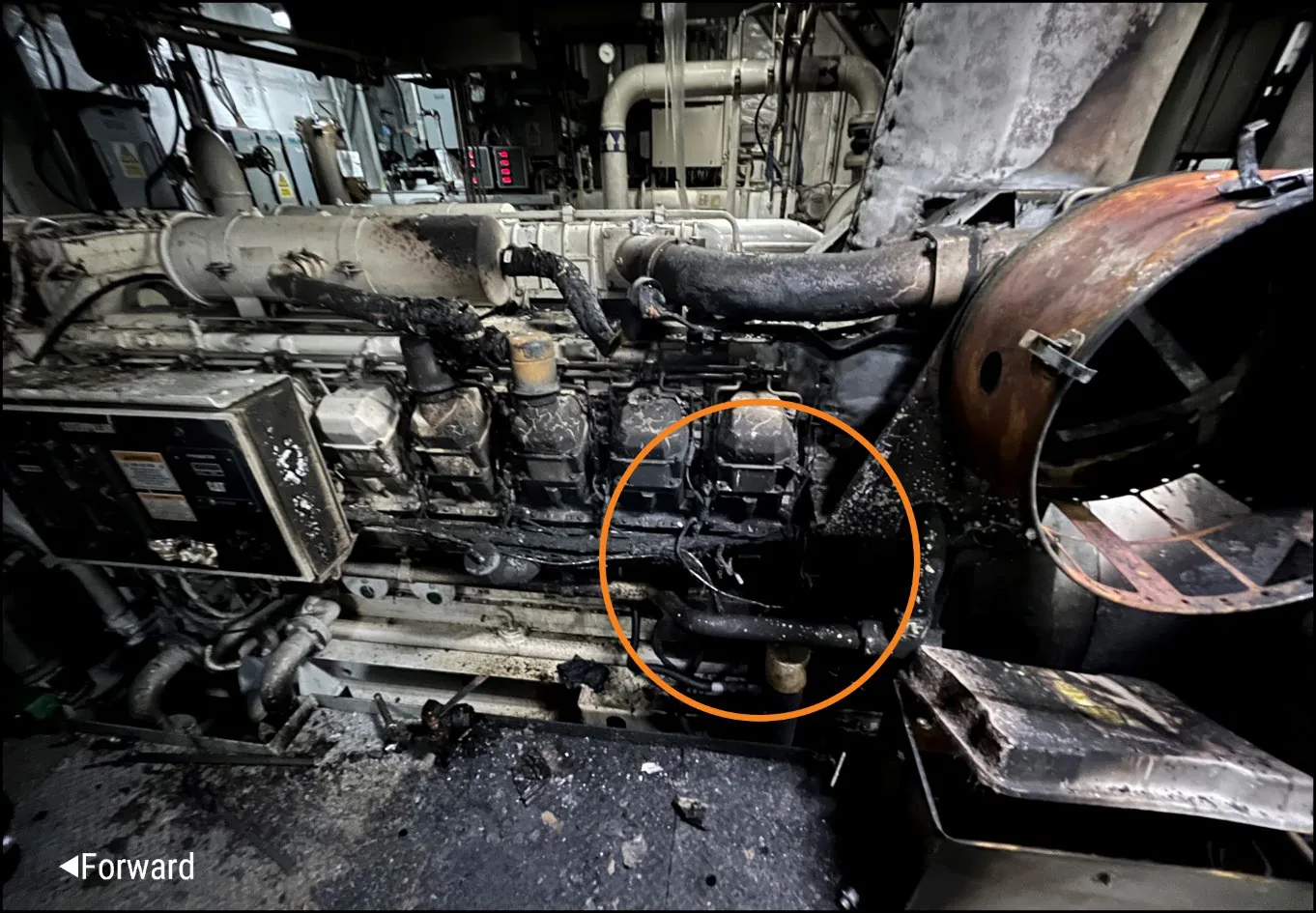
On 18 October 2023, at about 0710, the no. 2 generator engine on the passenger vessel Ocean Navigator failed catastrophically while the ship was docked in Portland, Maine. Parts burst through the engine block, oil mist ignited, and fire spread across the generator.
- Vessel: a 300-foot (91.4 m), Bahamas-flagged coastal cruise ship built in 2004, with four Caterpillar diesel engines.
- On board: 128 passengers and 82 crew, near the end of a 10-night cruise from Montreal to Boston.
- Outcome: a motorman working beside the engine was seriously burned; the fire went out after the engine room was sealed, and damage was estimated at $2.4 million.
2. Timeline
All times are local on 18 October 2023.
- About 0630: the ship docks; the no. 1 generator gives high exhaust temperature alarms and is shut down at 0708, leaving no. 2 running alone.
- About 0710: the third engineer and the motorman find a small oil leak from a loose crankcase door bolt on no. 2, and the engine fails as they sit beside it to tighten it.
- 0710–0716: the ship loses main power, the crew is alerted with a coded message, fuel valves and ventilation are shut, and the general alarm sounds.
- 0718–0731: the injured motorman is taken ashore, a fire team in breathing apparatus enters the engine room, and the captain orders passengers to evacuate.
- 0741–0748: the fire team finds only smoke, and all passengers are on the pier.
3. Root Cause
The NTSB found that debris in the engine’s lubricating oil caused the catastrophic failure, possibly because the crew had gone well beyond the manufacturer’s intervals for changing oil and filters.
- The oil had been in use for more than 5,000 hours, five times the recommended 1,000.
- The filters had run for 3,329 hours, over three times the limit, so debris could bypass them and circulate.
- Worn bearings lost their oil film, a connecting rod seized and broke free, and it ruptured the engine block.
- Hot, atomised oil escaped through the damaged covers and ignited on hot engine parts.
4. Risk
Engine rooms contain fuel, hot surfaces and forced ventilation, so a single engine failure can quickly become a fire that threatens the whole ship.
- An engine can fail without warning, throwing parts outwards at anyone working beside it.
- Losing the only running generator cuts main power across the ship.
- On a passenger ship, the crew must fight a fire while mustering and evacuating hundreds of people.
- Oil analysis that reads “normal” can still miss developing damage inside an engine.
5. Early Warning Signs
The engine gave signs of trouble in the weeks before, but none triggered an alarm.
- Crew added about 79 gallons of oil to no. 2 in two months, against about 5 gallons for the identical no. 1 and none for the main engines.
- A small oil leak from a loose crankcase door bolt was found minutes before the failure.
- The monitoring system did not track bearing temperatures, and the engines had no oil mist detectors.
- Oil samples had come back within limits, so the analysis gave no warning.
6. How Dtyle.AI Helps
Dtyle.AI analyses a vessel’s existing camera feeds on site. It cannot look inside an engine, so its role here is to give a visual picture alongside the certified fire detection, and to support the crew once an emergency begins.
- Fire & Smoke Detection can flag visible flame or smoke in covered engine room views and alert the bridge with a snapshot, the camera, the location and the time.
- Personnel Presence Monitoring estimates how many people are visible in a defined area, such as the engine room before it is sealed.
- Muster Monitoring gives visibility of people at muster stations during the passenger headcount.
- Gangway Monitoring gives visibility of people leaving and boarding during an evacuation.
7. Prevention
Dtyle.AI could not have prevented this failure: it cannot read oil condition, bearing wear, temperature or vibration, and it doesn’t replace maintenance schedules or engine monitoring. Following the manufacturer’s intervals remains the real defence. Its contribution is limited to the earliest visible signs.
- Live views of the generator area let the watch keep an eye on a reported leak between rounds.
- Recorded footage of work beside running machinery supports toolbox talks on when to stop an engine before a repair.
- Recorded events give crews real footage for training on engine room fire response.
8. Response Support
The crew’s response was quick and effective: they cut fuel and ventilation, mustered everyone and evacuated the ship without further injury. Visual information can support each of those steps.
- Live views of the engine room, while cameras keep working, help the captain judge the fire before sending a team inside.
- Muster station views help confirm the headcount, which here took about 15 minutes.
- Gangway views help track who has left the ship during an evacuation.
- Recorded clips help investigators understand how the fire developed.
9. Lessons Learned
The NTSB made no formal recommendations, but highlighted two lessons, and the new owner has acted.
- Quickly removing fuel and ventilation from an engine room fire can stop it spreading; crews should train often on these shutoffs.
- Manufacturer maintenance intervals exist for a reason, and operators should review them regularly.
- Oil consumption well above that of identical engines is a warning worth investigating.
- The damaged engine was rebuilt, and all connecting rod bearings on the no. 1 generator were replaced after inspection.
10. Key Benefit
A faster shared picture of a machinery space emergency, and better support for mustering and evacuating passengers.
- Visual confirmation of flame or smoke in covered areas, alongside fixed detection.
- Remote views of the engine room when it is too dangerous to enter.
- Support for headcounts at muster stations and the gangway.
- A visual record for investigations, drills and crew training.