

A crane wire can pass every routine check and still be close to failing under its grease. This summary of the NTSB’s investigation covers what happened, the risk, and where Dtyle.AI fits.
1. Incident
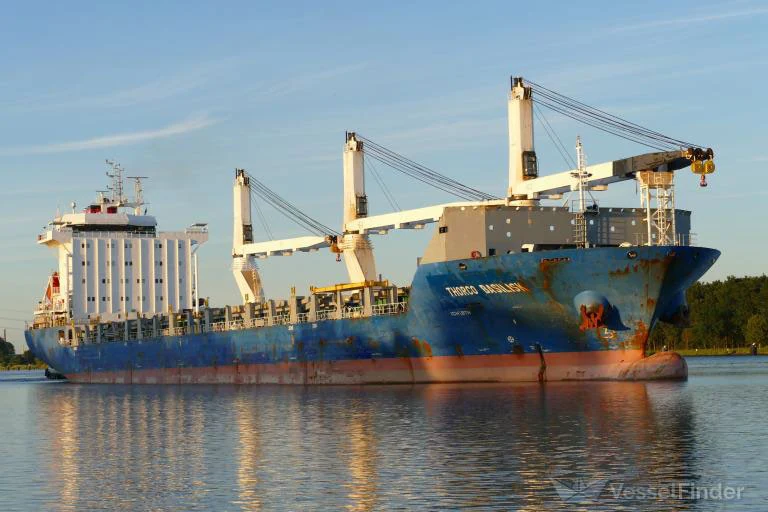
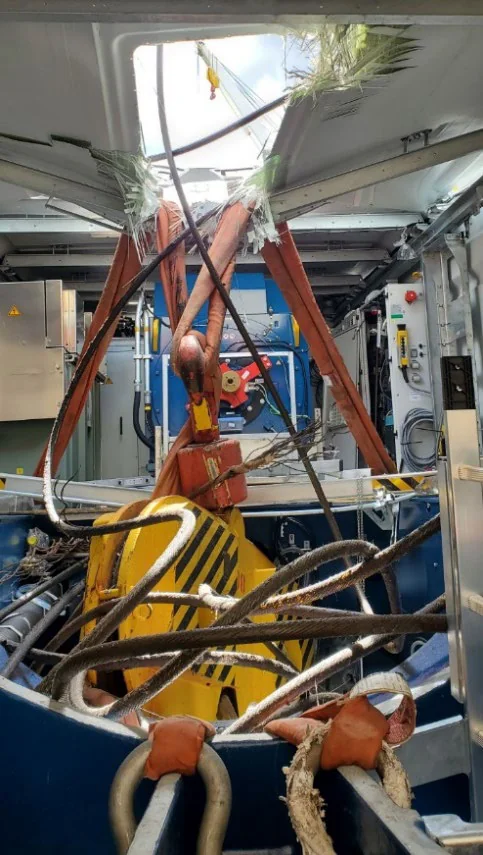
On 23 July 2022, at about 1440, the hoisting wire on one of Thorco Basilisk’s deck cranes parted while stevedores were lifting a wind turbine nacelle out of a cargo hold in Houston, Texas. The 69-tonne nacelle dropped onto the tween deck, and the crane block fell through its roof.
- Vessel: a 161.5-metre (530 ft), Swiss-flagged multi-purpose cargo ship built in 2013, with three 80-tonne deck cranes.
- Cargo: 11 wind turbine nacelles loaded in Rostock, Germany, being discharged at the Greensport Terminal.
- Outcome: no injuries or pollution, though five stevedores were standing about 5–6 feet from the impact; damage was estimated at $3–5 million.
2. Timeline
All times are local on 23 July 2022, unless stated.
- 0645–0715: stevedores hold a job safety briefing, then start discharging hold no. 3 with crane no. 3, finishing at 1020.
- 1230: they switch to crane no. 1 and lift two nacelles from hold no. 1 without incident.
- 1400–1438: after lunch and a second safety briefing, the foreman confirms the third nacelle is rigged to the manufacturer’s guidance.
- 1440: with the nacelle 3–6 feet above the deck, the hoisting wire parts and the load drops; the port captain halts operations at 1445.
- 25 July: the remaining cargo, including the damaged nacelle, is discharged with a shore crane.
3. Root Cause
The NTSB determined that the probable cause was undetected corrosion and wear in the wire rope’s strands. The load was within the crane’s rating, and there was no evidence of shock loading or rigging failure.
- The wire showed significant external and internal corrosion, with pitting worst near the break.
- The crew regreased the wire without first removing the old grease, as the manufacturer advised, so the corrosion stayed hidden.
- Annual class surveys were visual only and did not measure the wire’s diameter or check its internal condition.
- No reference diameter was recorded at installation, so wear could not be measured over time.
- The maintenance system had no replacement interval for crane wires; the 14-year-old wire was judged near the end of its service life.
4. Risk
When a crane wire fails, a heavy load drops without warning onto whatever, and whoever, is below it.
- Salt water and humid sea air corrode steel wire ropes, often from the inside.
- Grease protects a wire but can also hide the damage that inspectors need to see.
- Stevedores rigging and guiding loads in a hold work close to the lift.
- A dropped load can damage the ship’s structure as well as costly cargo.
5. Early Warning Signs
The records gave little sign of trouble, which is what made this failure hard to foresee.
- Maintenance entries noted the wire was greased and “in good condition” in the weeks before the lift.
- For two months, crane no. 1 had mostly moved 32-tonne tween deck pontoons; this was its first heavy lift in that time.
- The wire had been in use for nine years, close to the 10-year limit in the class standard.
- The crane operator inspected the crane visually that morning and noticed nothing unusual.
6. How Dtyle.AI Helps
Dtyle.AI analyses a vessel’s existing camera feeds on site. It cannot assess a wire rope, so its role here is about people around heavy lifts, where cameras cover the hold and deck.
- Unsafe Act Detection can flag behaviours the operator has defined as risky, such as people entering a line-of-fire zone under a suspended load.
- Restricted Area Monitoring can alert the bridge or cargo watch when someone enters a configured drop zone during a lift, with a snapshot, the camera and the time.
- Personnel Presence Monitoring estimates how many people are visible in a defined area, such as the hold, before and after a lift.
- Event records keep a clip of each lift for review and training.
7. Prevention
Dtyle.AI could not have prevented this failure: it cannot see corrosion inside a wire, measure diameter or judge a wire’s remaining life. Cleaning before inspection, diameter records and set replacement intervals remain the real defences. Its contribution is helping keep people out of harm’s way if a lift does fail.
- Alerts when someone stands under or beside a suspended load give the foreman a better chance to move them back before the hoist starts.
- Reviewing recorded lifts shows how often people work inside the line of fire, supporting job safety briefings.
- Footage of heavy lifts gives stevedores and crew real examples for training.
8. Response Support
Operations were stopped within minutes and everyone was accounted for before a stand-down. Visual information can support each step.
- Presence counts in the hold help confirm quickly that everyone is out of the drop area.
- Live views let the port captain and cargo watch assess a damaged load without sending people under the crane.
- Recorded clips show how the load and block fell, adding to witness accounts for investigators and insurers.
9. Lessons Learned
The NTSB highlights the difficulty of maintaining steel wire ropes at sea, and the operator has already acted.
- Wire ropes need diligent inspection and should be replaced at recommended intervals, or sooner depending on conditions and use.
- Old grease should be removed before a close inspection, as the manufacturer advised.
- The operating company added a five-year crane wire replacement interval to its maintenance system.
- Crane manufacturer technicians inspected all three cranes and replaced every hoisting wire.
- The class society’s audit also found the crew had not notified the flag state and class promptly after the casualty.
10. Key Benefit
Fewer people in the line of fire during heavy lifts, so an equipment failure is less likely to become an injury.
- Alerts when people enter configured zones under suspended loads.
- Quick confirmation that an area is clear after an incident.
- A visual record of each lift for investigations and audits.
- Real examples for stevedore and crew lifting training.